
Why Fractional Jet Ownership Is Growing While Whole Aircraft Ownership Declines
Written by: Abram Finkelstein
People do not buy or operate a private aircraft to make a statement. They do it to buy back their own time. The value of private aviation has never really rested on the aircraft itself; it rests on the ability to leave when one is actually ready, land close to where one is actually going, and skip every part of travel that has nothing to do with the destination. An airplane, at its core, is a time machine for people who value their time, and each year, commercial air travel hands that proposition more reasons to matter. Airline schedules have consolidated around fewer hubs and less convenient departure windows, connections have grown longer, cabins have grown tighter, and the airport experience itself (security lines, terminal congestion, ground transportation) has become something most travelers organize their day around avoiding rather than something they simply tolerate. Private aviation exists to remove that entire experience from a traveler’s life.
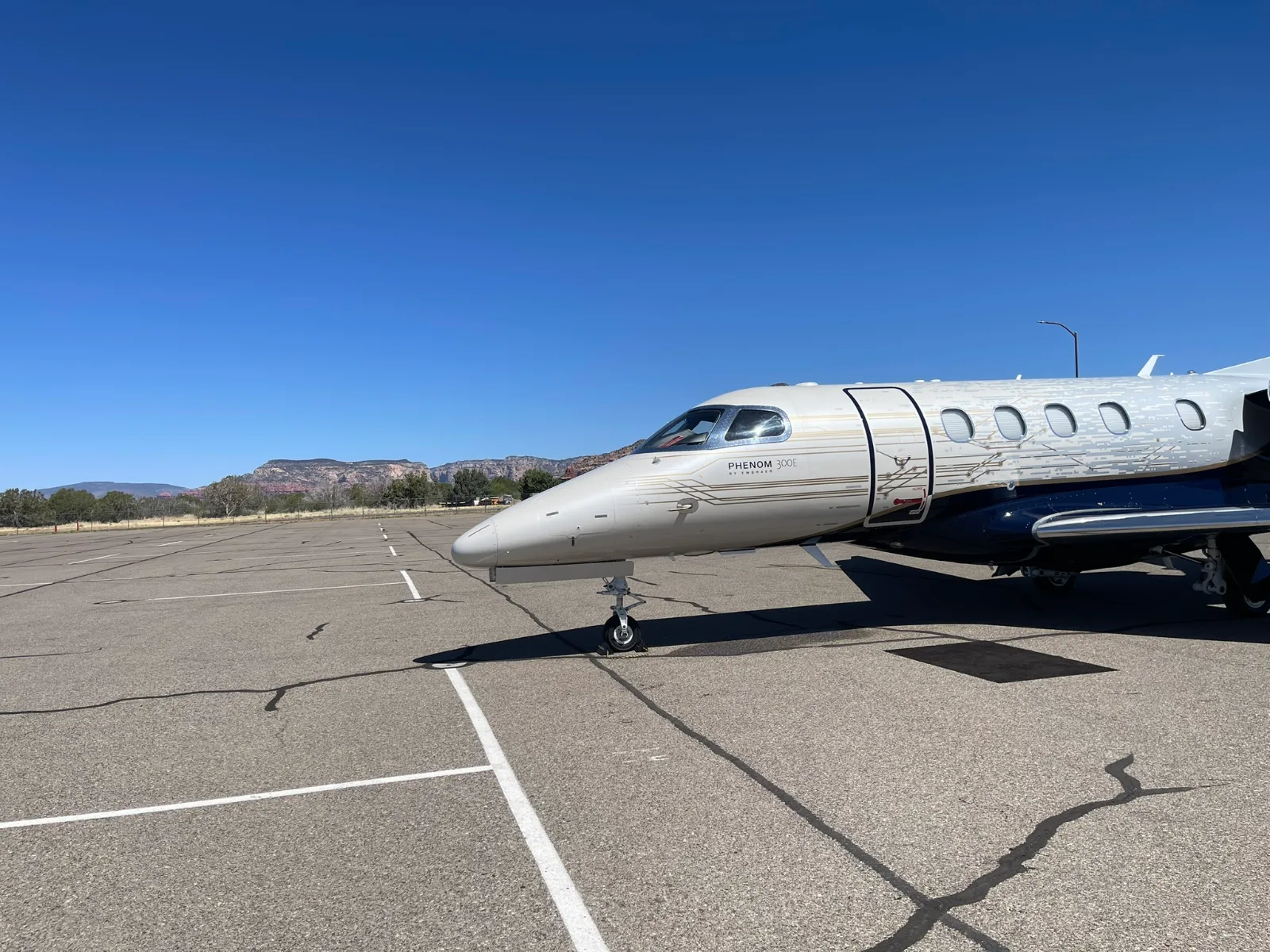
That is precisely why the trend now showing up in the industry’s own data is noteworthy and should be taken seriously. Demand for the private aviation outcome has never been stronger: control of one’s own schedule, freedom from the airline experience, hours returned to the traveler rather than surrendered to it. Yet a growing share of that demand is being satisfied through fractional jet ownership programs, jet cards, and on demand charter rather than through whole aircraft ownership. The airplane has not lost its appeal. Owning one, on the other hand, has quietly grown harder to justify on its own terms, and that shift is showing up as a measurable redirection of flight activity across the market.
Key takeaways
- Fractional flying in North America rose 12.5% year over year while Part 91 owner-flown activity fell 3.6%, a sixteen point gap.[1]
- Fractional fleets have grown 65% to 70% since 2019 and fly 800 to 1,200 hours per aircraft each year, against 200 to 300 hours for a typical privately owned jet.[2]
- New jet deliveries are still rising (854 in 2025, up 11.8%), so the aircraft is not the problem.[4]
- The drivers pushing owners toward fractional access are crew staffing, coordination, availability, parts delays and administrative overhead. Every one of them is an operational problem that can be solved without giving up the aircraft.
Why is fractional jet ownership growing while whole ownership declines?
How much has fractional flying grown compared with Part 91 activity?
ARGUS TRAQPak is a flight tracking service, operated by ARGUS International, that compiles operator reported flight activity across the business aviation fleet and is one of the industry’s most widely cited sources for measuring how much business aircraft actually fly. Figures from TRAQPak, reported here by GlobalAir, show fractional flying rising 12.5% year over year in North America, even as Part 91 activity, which is aircraft owned and operated by individuals and companies for their own personal and business use, fell 3.6% over the same period. That amounts to a gap of sixteen points between the segment gaining altitude and the segment losing it.[1] The divergence shows up across cabin classes and is sharpest at the largest end of the market: large cabin flying declined 5.2% overall, yet within fractional fleets specifically it jumped 18.4%, the single largest increase ARGUS recorded in its data set.[1] The shift is not confined to the top of the market, however. JETNET, an aviation intelligence firm that tracks the global business jet fleet, transactions and market trends, reports in its outlook at the midpoint of 2026 that midsize and super midsize models such as the Latitude and the Praetor 500 are key drivers of fractional fleet growth, aircraft that offer a bigger cabin without a meaningful jump in direct operating costs, which makes them attractive to fractional operators and individual buyers alike.[2] Charter, meanwhile, posted a more modest 3.6% gain, suggesting owners are not simply replacing ownership with occasional charter trips; they are replacing it with guaranteed access through a program.[1]
How many hours does a fractional jet fly compared with a privately owned jet?
The same JETNET outlook adds scale to the trend by fleet size: fractional fleets have grown 65% to 70% since 2019 and now fly 800 to 1,200 hours annually per aircraft, against roughly 200 to 300 hours for a typical privately owned jet.[2] That utilization gap is a microcosm of the trend. An owned aircraft that flies a few hundred hours a year is carrying the full fixed cost of crew, hangar, insurance, and maintenance infrastructure for a fraction of the use a shared aircraft receives, and the economics of that arrangement are becoming harder to justify.
Are the largest charter and fractional operators still growing?
The 2025 operator rankings tracked by Private Jet Card Comparisons reinforce the same story from the supply side. The 30 largest charter and fractional operators flew 1,725,728 hours in 2025, an 8% increase, with 24 of the 30 posting gains over the previous year, compared with only 18 a year earlier.[3] NetJets alone flew 719,086 hours, up 8.08%, while Flexjet flew 284,533 hours, up 19.64%.[3] Those numbers represent growth rates that the ownership model, built up over decades, is not generating.
Are people still buying business jets?

It would be inaccurate, however, to describe this as a wholesale abandonment of ownership. GAMA’s 2025 shipment report shows 854 business jets delivered, an 11.8% increase, with billings up 16.1% to 31.0 billion dollars,[4] so clearly new aircraft are still being built and bought in volume. A meaningful share of that volume, though, is going into the various fractional providers’ expanding fleets rather than into the hands of new individual owners, which is consistent with the overall trend. GAMA does not publish deliveries by buyer type, so the exact split cannot be stated with precision, but a partial figure illustrates the scale of it: NetJets alone planned to take delivery of approximately 100 new jets in 2025,[5] which by itself works out to roughly 12% of GAMA’s entire industry total for the year. Add Flexjet, Vista, and the other large fractional and charter fleets, each also buying new aircraft in volume, and the fractional and charter share of new deliveries is almost certainly well above that figure, even though no single published source totals it.
Separately, a Honeywell survey cited by JETNET found that a meaningful share of aircraft owners also hold a fractional share, typically to supplement rather than replace the aircraft they already operate, and fewer than 10% of surveyed flight departments plan to eliminate their department entirely.[2] This means the pressure pushing buyers toward fractional and charter access is real enough that even owners who keep their aircraft, and the flight departments that operate them, are hedging against it.
Are jet cards growing too?
Jet cards complicate the picture, which is mixed rather than uniformly positive. Card pricing has risen 28% since December 2020, including a 6% increase in the first quarter of 2025 alone. Those cost increases are driven by higher fuel and maintenance costs and by demand that has stayed ahead of supply.[6] However, VistaJet reported a 10.5% decline in advance sales of flying hours for the first nine months of 2024 compared with the same period in 2023, attributed to affluent customers reassessing discretionary travel spending.[6] By 2026 even NetJets, the largest program in the market, had pulled back on jet card sales, an opening its competitors are now moving to fill.[7] The lesson is not that jet cards are failing. It is that within the broader move away from ownership, buyers are still sorting out which access model, fractional, jet card, or charter, suits them best, and providers are competing hard to be the one they choose.
What are the downsides of owning a private jet? The real driver is everything around the airplane
If the aircraft itself were the problem, deliveries would be falling, not rising. What is falling is owners’ appetite for managing everything that keeps an aircraft airworthy and available, and the reasons show up consistently across operator commentary and industry data alike.
Why is crew staffing the biggest problem for aircraft owners?
Crew staffing sits at the top of the list. NBAA has documented roughly 14,200 mandatory retirements from major U.S. carriers between 2015 and 2022 alone.[8] That wave has pulled experienced pilots and technicians toward the airlines, where union contracts offer pay and stability that a flight department built around one aircraft cannot easily match, leaving such departments competing for a shrinking, more expensive labor pool. A fractional or charter provider absorbs that staffing burden across an entire fleet; an individual owner absorbs it alone, one open seat at a time.
What does it actually take to coordinate a private aircraft?

Coordination is the second driver, and it is easy to underestimate how many distinct functions it actually contains. A flight department, or an owner relying on outside support, needs someone handling scheduling, which means building and constantly rebuilding the flight calendar around shifting business needs; dispatch, which means filing flight plans, securing permits and visas for international trips, and following each flight in real time; trip support, which means coordinating with fixed base operators, ground transportation, hotels, catering, and international handlers before the aircraft ever leaves the ramp; and crew coordination, which means matching qualified, current pilots to each trip and adjusting quickly when a schedule changes. The work does not stop when the aircraft lands. NBAA describes the role of the scheduler and dispatcher to include post flight reconciliation: processing invoices, managing chargebacks from vendors, and keeping records current between one trip and the next so nothing is left unresolved.[9]
How much does aircraft management cost per flight hour?
None of this is published anywhere as a single line item, but the closest available figures suggest the scale of it. A typical full service aircraft management arrangement, which bundles crew scheduling, 24 hour operations support, and record keeping, runs close to $150,000 per year.[10] Divided across the roughly 200 annual flight hours a typical midsize jet flies, that is nearly $750 of administrative overhead built into every hour the aircraft is in the air, before fuel, crew salaries, insurance, or maintenance are even counted.[10] That figure is a calculation rather than a published statistic, since no industry source breaks out scheduling, dispatch, trip support, and post flight administration as their own line item, but it is consistent with the roughly $5,500 an hour all in cost the same source reports for a similarly sized aircraft.[10] As quoted in AvBuyer, Flexjet chief executive Michael Silvestro has described the appeal of the fractional model in exactly these terms, citing “management complexities and pilot shortages to staffing issues and the unreliable offset of costs through charter revenue” as the burdens whole ownership carries and fractional access does not.[11]
Why does aircraft availability push owners toward fractional programs?
Aircraft availability and dispatch reliability follow closely behind. A single owned airplane has a single point of failure: if it is down for scheduled maintenance, an unscheduled squawk, or a parts delay, the owner has no aircraft, full stop. Fractional and charter programs solve this structurally, by drawing on a fleet rather than a single tail number, which is precisely why usage patterns are shifting toward them even as overall flying grows. flyExclusive founder Jim Segrave has placed the crossover point at roughly 50 annual hours, where buyers begin seriously considering fractional access, with whole ownership generally not penciling out favorably below about 200 hours a year.[11] That represents a range that describes a large share of the business aviation buyer population.
How do parts shortages affect private aircraft owners?
Parts supply is the quieter driver, but it is a real one. A shortage of raw materials such as composites and titanium, combined with a shrinking pool of used serviceable material, has stretched turbine repair turnaround times across the industry, and MRO providers are prioritizing their own fleet customers when shop capacity is tight.[12] That leaves an individual owner without a fleet relationship waiting longer, and paying more, for the same repair a fractional or charter operator can expedite, and the delay leaves the aircraft grounded and unable to fly, which is the single most costly outcome, and the most damaging to the ownership experience of any owner who has scheduled a trip around the airplane’s availability.
What are the tax advantages of fractional jet ownership?
Reinstated 100% bonus depreciation under the One Big Beautiful Bill Act has added a further tailwind toward fractional purchases specifically,[11] since fractional ownership simplifies the documentation and record keeping needed to substantiate depreciation claims relative to a wholly owned aircraft with mixed personal and business use.[13] None of this suggests owners have stopped valuing control, tax treatment, or the appreciation potential of an aircraft kept in excellent condition. It suggests, instead, that the operational cost of accessing those benefits through ownership has climbed faster than the benefits themselves.
Is fractional jet ownership worth it, or is friction the real problem?
The data does not show that aircraft owners have stopped wanting what private aviation provides; it shows that a growing number of them are unwilling to personally carry the operational load required to keep that capability reliable. Every driver behind the shift toward fractional and charter access, such as scheduling, dispatch, trip support, maintenance oversight, crew qualifications, and staffing, is an operational problem, not a reason to give up the aircraft. Solving it does not require replacing the aircraft; it requires a partner built to absorb that load on the owner’s behalf, which is the role WingLeader plays.
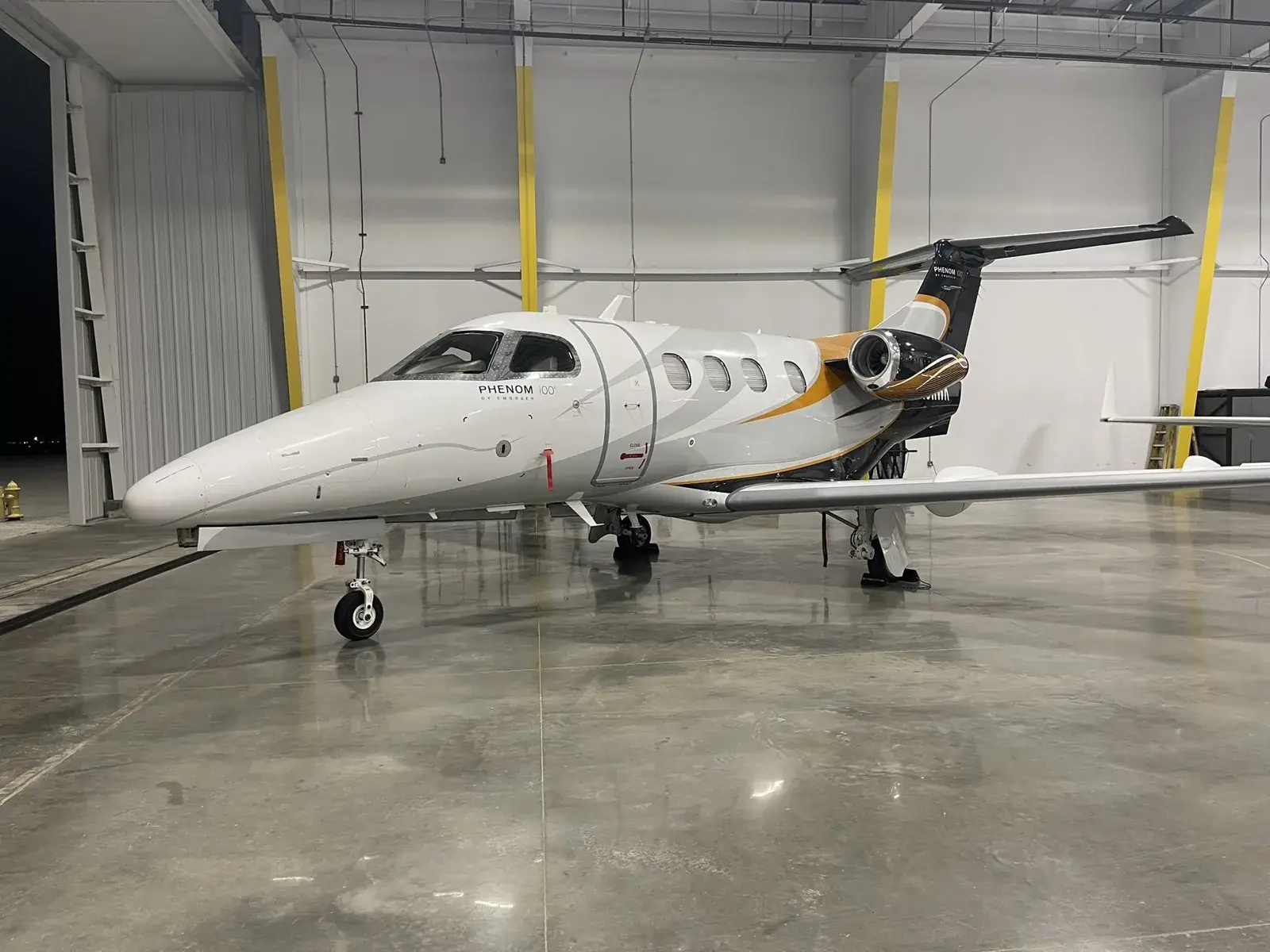
For an aircraft owner or an existing flight department, that means a single point of coordination across the functions that would otherwise pull attention in six directions at once: scheduling that keeps the aircraft matched to actual demand rather than sitting idle against a fixed cost base; dispatch and trip support that resolve the permits, fuel planning, and ground logistics behind every departure so a trip is ready before the owner has to think about it; maintenance support that tracks the aircraft’s condition and vendor relationships closely enough to catch a discrepancy before it grounds the aircraft entirely; crew qualifications management that keeps training, currency, and duty time records ready for audit without the owner having to track any of it personally; and the cutting edge technology to manage all of that and to provide the data in a meaningful way when it is needed. Where a flight department is understaffed, or an owner has no dedicated crew at all, this kind of partner can also source and staff qualified contract pilots, closing the exact staffing gap that NBAA’s data shows is pulling talent toward the airlines.[8]
The proposition is not that ownership needs to be abandoned in favor of fractional access. It is that ownership should not require the owner, or the flight department supporting them, to personally manage the challenges that are currently pushing so many of their peers toward the exit.
What choice do business aviation buyers actually face?
The framing of this trend is not “ownership versus fractional” as competing products. It is a question of who absorbs the operational burden that keeps any aircraft, whether owned, fractional, or chartered, safely and reliably in the air. Fractional and charter providers have built entire organizations to absorb that burden at fleet scale, and the data above shows buyers rewarding them for it. An aircraft owner, and the flight department behind them, should not have to give up the freedom and convenience of owning their own aircraft to get the same relief. WingLeader removes the friction that is encountered by aircraft owners and relieves them of the administrative and regulatory challenges of ownership.
Keep the aircraft. Hand off the workload. If you own a business aircraft, or run a flight department that is stretched thin, see how WingLeader’s aircraft management services cover scheduling, dispatch, trip support, maintenance tracking and crew records for Part 91 operators running one to five aircraft. You can also run your own numbers with the cost calculator, or schedule a consultation with Abram.
Frequently asked questions
Is fractional jet ownership worth it?
It depends almost entirely on how much you fly. Industry executives put the point where buyers start seriously considering fractional access at roughly 50 hours a year, and whole ownership generally does not pencil out below about 200 hours a year.[11] Above that range, an owned aircraft gives you more control over scheduling, crew, cabin configuration and tax treatment. The trade-off is that someone has to carry the operational load, and that load is what pushes many owners toward a program.
How many hours a year do you need to fly to justify owning a jet?
The figure most often cited is about 200 flight hours a year.[11] A typical privately owned jet flies 200 to 300 hours annually, while a fractional aircraft flies 800 to 1,200.[2] Below the 200 hour mark, the fixed costs of crew, hangar, insurance and maintenance are spread across too few hours, and the cost per hour climbs quickly.
What are the downsides of owning a private jet?
The aircraft itself is rarely the issue. The downsides owners cite are hiring and keeping qualified crew in a market where airlines are pulling pilots away,[8] the daily work of scheduling, dispatch, trip support and post flight paperwork,[9] having a single aircraft that is unavailable whenever it is in maintenance, and longer waits for parts and repairs when you do not have a fleet relationship with an MRO.[12] Add administrative overhead of roughly $150,000 a year for a full service management arrangement,[10] and the reasons for the shift toward fractional programs become clear.
Can you write off 100% of a private jet?
The One Big Beautiful Bill Act reinstated 100% bonus depreciation for qualifying business use, and it applies to both wholly owned and fractional aircraft.[11] The catch is substantiation. An owner who mixes personal and business travel on a wholly owned aircraft has to document that use carefully, while a fractional share simplifies the record keeping.[13] Good flight records and expense tracking close most of that gap for owners, and you should confirm the specifics with an aviation tax advisor.
How much does aircraft management cost?
A typical full service aircraft management arrangement covering crew scheduling, 24 hour operations support and record keeping runs close to $150,000 a year, which works out to roughly $750 per flight hour at 200 hours of flying, before fuel, crew salaries, insurance or maintenance.[10] All in operating cost for a similarly sized midsize jet is reported at about $5,500 an hour.[10] WingLeader’s cost calculator lets you model your own aircraft and utilization.
What is the difference between Part 91 ownership and fractional jet ownership?
Part 91 covers aircraft owned and operated by individuals and companies for their own personal and business use, with the owner or their flight department responsible for crew, maintenance, scheduling and compliance. Fractional programs operate under their own set of rules, Part 91 Subpart K, where the program manager carries most of that operational responsibility across a shared fleet in exchange for a share purchase, monthly management fees and hourly charges.
Do aircraft owners have to choose between owning and fractional access?
No. A Honeywell survey cited by JETNET found that many owners hold a fractional share alongside the aircraft they already operate, using it to supplement rather than replace it, and fewer than 10% of surveyed flight departments plan to close down.[2] For owners who want to keep their aircraft, an aircraft management partner can absorb the scheduling, dispatch, maintenance tracking and crew work that drives most of the friction, without the owner giving up control of the airplane.
Sources
- GlobalAir, citing ARGUS TRAQPak data. “Fractional fleets are carrying business aviation. How about everyone else?”
- JETNET, citing a Honeywell survey. “Business Aviation at the Midpoint of 2026. 5 Takeaways”
- Private Jet Card Comparisons. “2025’s 30 Biggest Charter/Fractional Private Jet Companies”
- AVweb. “GAMA 2025 Aircraft Shipments, Billings Report”
- SherpaReport. “No Signs of a Slowdown at NetJets”
- Charter Worldwide. “2025 Private Jet Card Trends: Pricing Increases, Flight Activity Growth, and Industry Struggles”
- Forbes / Doug Gollan. “NetJets Curtails Jet Card Sales and Competitors See Opportunities”
- NBAA. “Is a Staffing Shortage Looming?”
- NBAA. “Reasons to Use a Scheduler/Dispatcher”
- Fly Hangar 7. “Aircraft Management Cost: A Complete 2026 Guide”
- AvBuyer, quoting Flexjet CEO Michael Silvestro and flyExclusive founder Jim Segrave. “Will Fractional Operator Growth Continue in 2026?”
- GlobalAir. “Turbine repair turnaround times are stretching, and owners pay for the wait”
- Flexjet. “Fractional Jet Ownership: Why Interest Is Rising in 2025”